Case studies

Real PRS workcells, written for production review.

Public-safe examples of robotic systems built around throughput, quality, repeatability, operator safety, and existing production equipment.

Syringe loading Robotic deburring Pipette loading Blister loading Insert molding UID marking Battery testing Bearing handling Palletizing AI vision Case packing Robot heritage
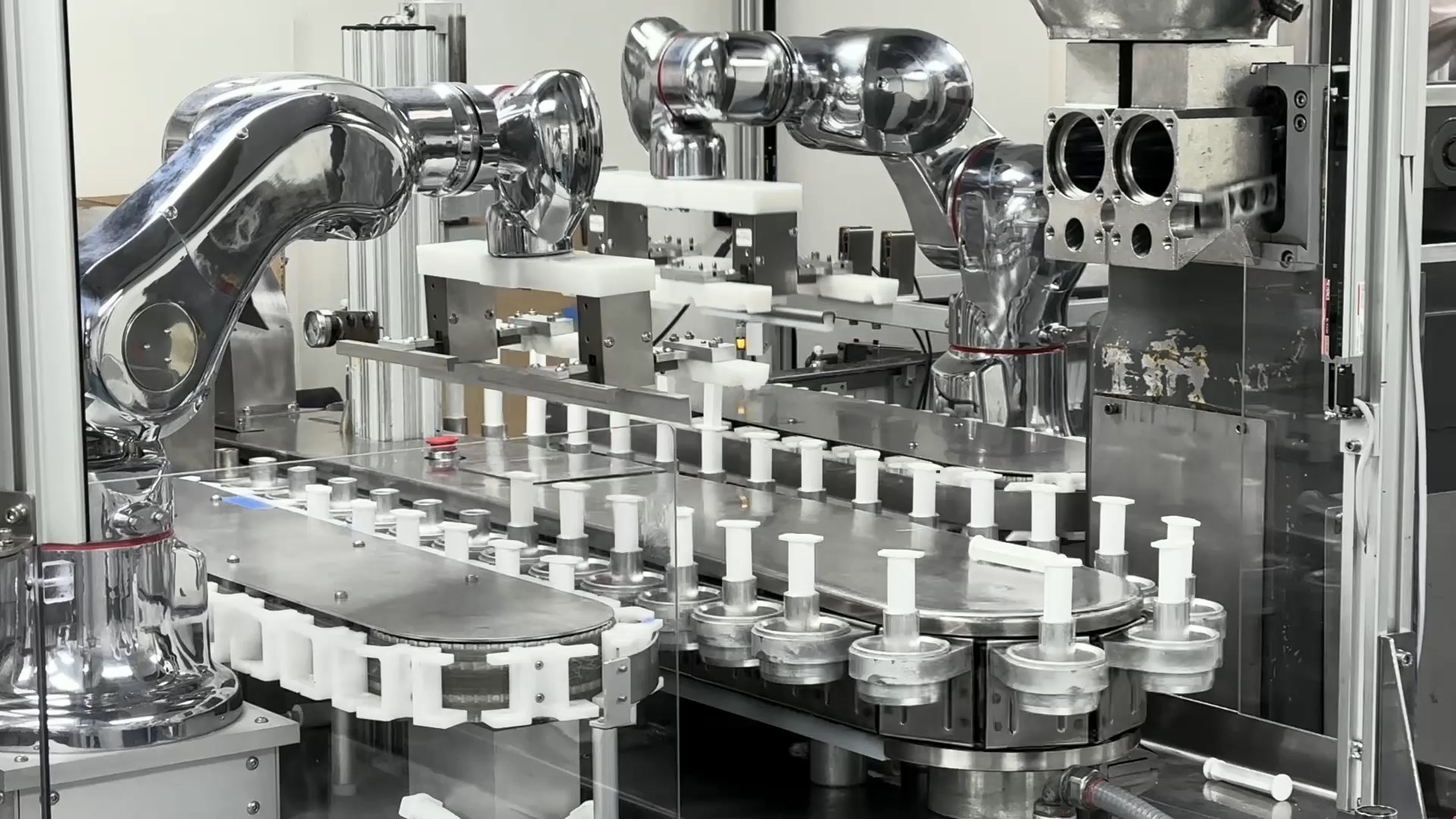
Two Kawasaki MS005N robots loading syringe components into an existing filling line

Pharma / Filling-line support

High-rate syringe component loading.

PRS designed and built a two-robot workcell to support an existing syringe filling line. The system loads syringe barrels into the filling process, then inserts and presses plungers after fill.

Production challenge

The manufacturer needed to increase output around an existing filling line without losing control of component presentation, operator access, or final assembly quality.

PRS solution

Two Kawasaki MS005N robots use custom end-of-arm tooling, automated feeding, and a custom HMI. Robot 1 picks barrels in groups of six and loads the filling line. Robot 2 inserts and presses six plungers after fill.

  • 100 parts per minute production rate.
  • Automated feeding designed for up to 150 parts per minute.
  • Removed an operator, increased throughput, and reduced rework.
Robotic deburring system poster frame

Aerospace and Defence / Machine tending

Robotic deburring with 3D bin picking.

PRS automated the handling around an existing rotary deburring machine that had previously been used in a manual process.

Production challenge

The existing deburring equipment still had value, but manual load, unload, and reorientation steps constrained production flow. Parts arrived in random orientation.

PRS solution

A Kawasaki RS007N with Mech-Mind 3D vision identifies pipe sections in a bin, picks each part with a custom vacuum tool, loads a pneumatic collet, reorients the part for second-side processing, and unloads completed parts to a separate bin.

  • Automated a previously manual process.
  • Used existing production equipment instead of replacing the deburring machine.
  • Added 3D vision-guided handling for random bin presentation.
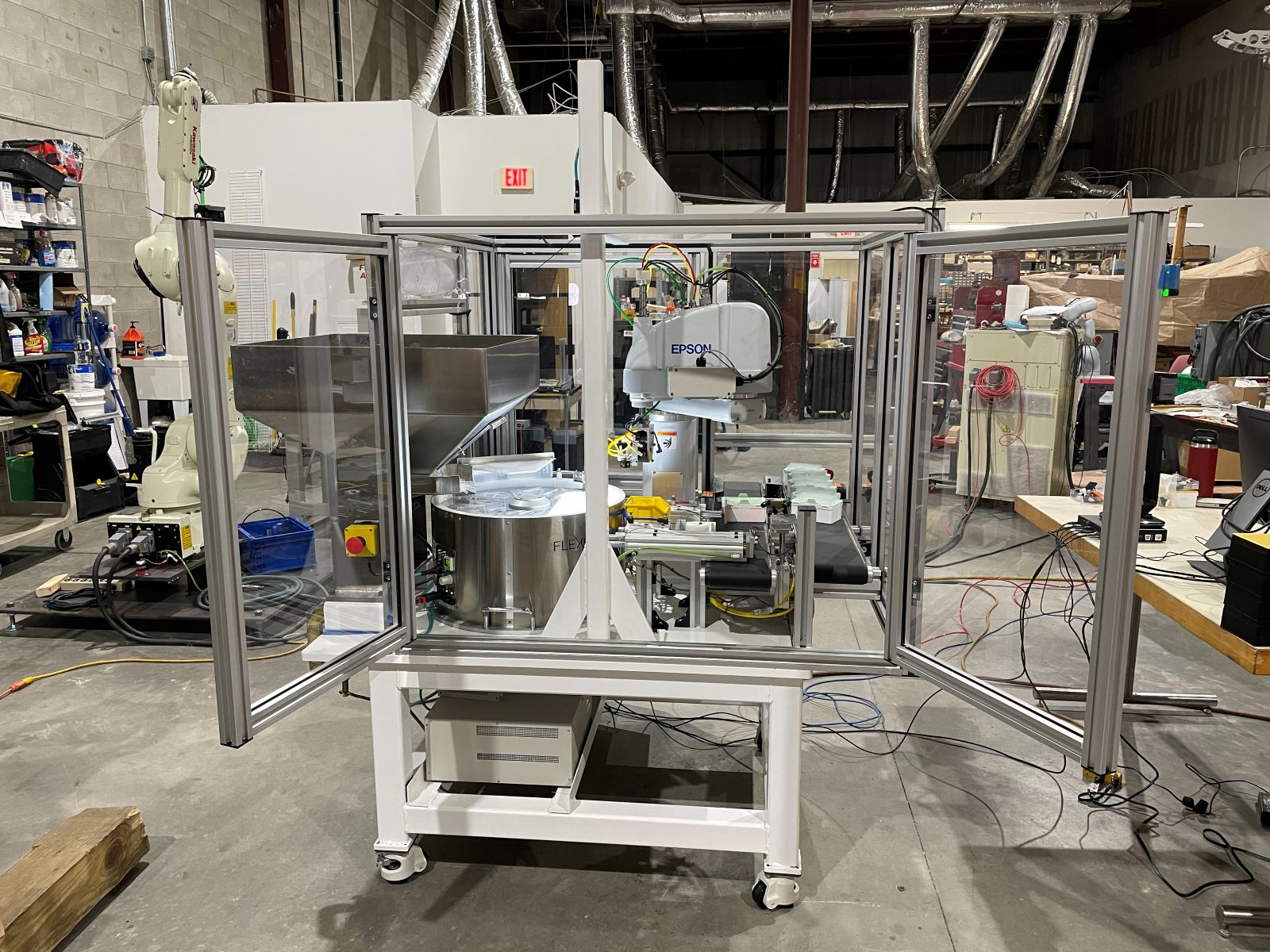
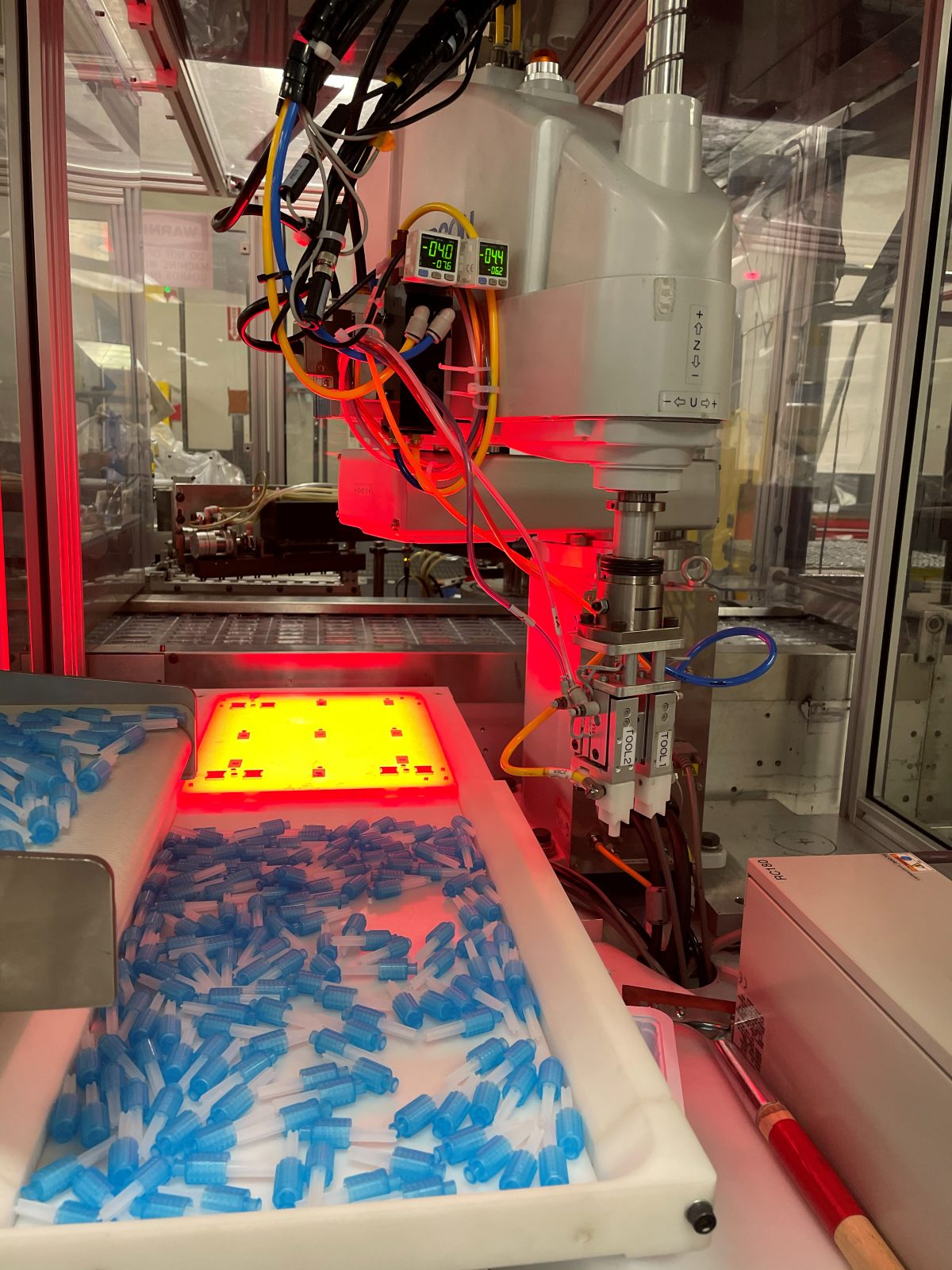
Epson G6 SCARA pipette loading cell with ARS Flexibowl

Pharma / Flexible feeding

Vision-guided pipette loading.

PRS built an Epson-based robotic workcell to pick bulk-fed pipettes and load them into molded containers.

Production challenge

The process required reliable orientation and placement of small parts from bulk presentation into a precise 150-position molded container.

PRS solution

An Epson G6 SCARA uses Epson CV2 vision to locate parts on an ARS Flexibowl, then picks each pipette with a custom vacuum tool that flips the part vertically for placement.

  • Vision-guided picking from flexible feeding.
  • Vertical part orientation using custom end-of-arm tooling.
  • Integrated incoming and outgoing conveyor flow.
Vision-guided robotic blister-machine loading

Medical Devices / Packaging

Blister-machine loading at 45 parts per minute.

PRS integrated a vision-guided robotic loading system that picks parts from a flexible feeder and loads them directly into an indexed blister packaging machine.

Production challenge

The robot had to find parts reliably, pick two at a time, load indexed pockets, and stay synchronized with the packaging machine.

PRS solution

Cognex vision and an Omron Anyfeeder present and locate parts. The robot performs two-up loading into blister pockets before the machine indexes to the next empty rows.

  • 45 parts per minute load rate.
  • Two-up robotic loading.
  • Direct integration with indexed blister packaging equipment.
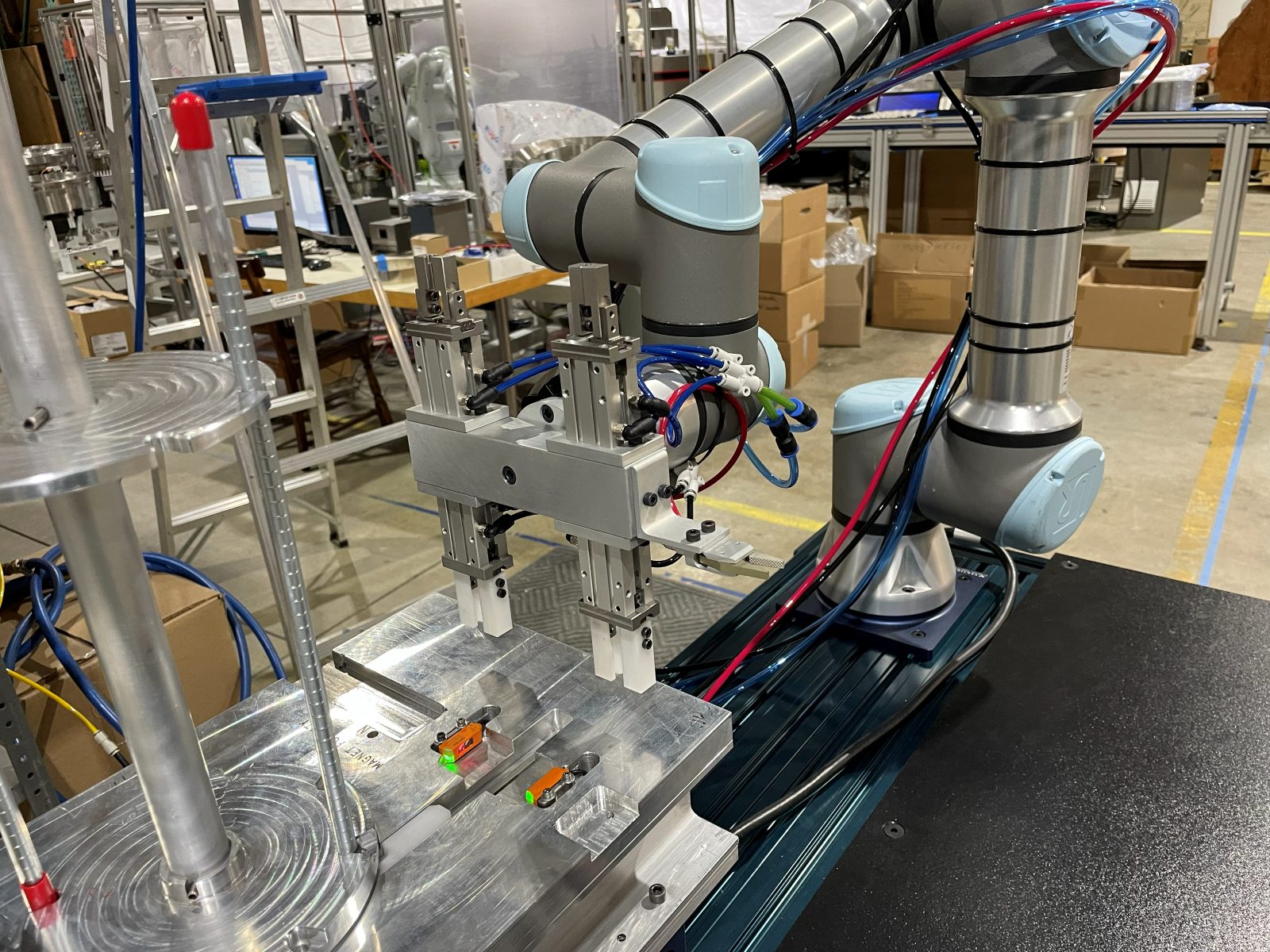
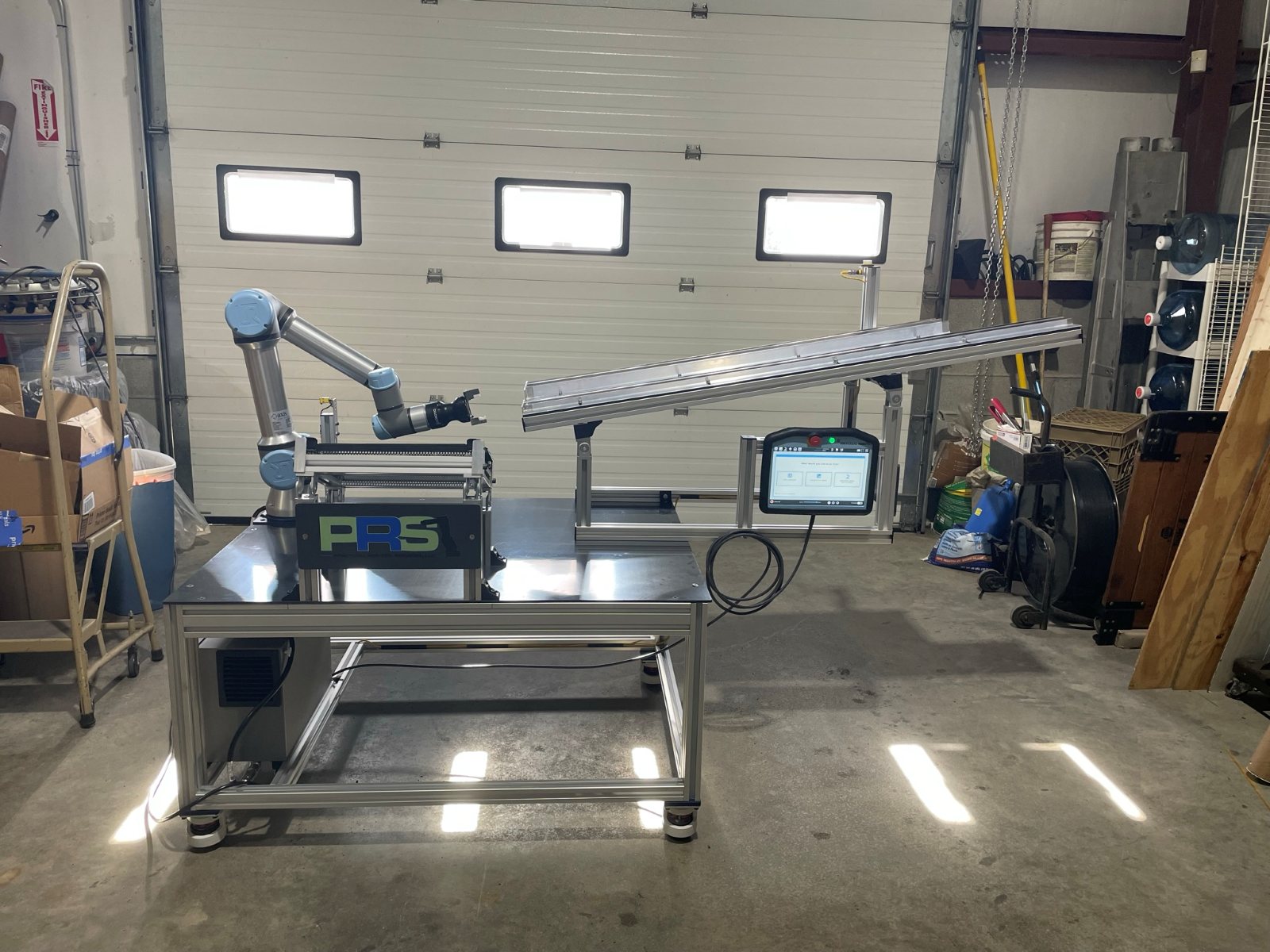
UR5e insert molding workcell with magnet feeding and polarity verification

Medical Devices / Machine tending

Insert molding with polarity verification.

PRS built a cobot-based insert molding workcell for feeding rare earth magnets, verifying polarity, loading a vertical molding machine, and unloading finished molded parts.

Production challenge

The process required two magnets with opposite polarity to be presented, verified, and inserted before molding, then separated from runner and sprue material after the cycle.

PRS solution

A UR5e picks magnets from a carousel-fed escapement, verifies polarity, loads the molding machine, communicates through Euromap 67, removes runner and sprue material, and packs finished parts into bins.

  • 14-second cycle.
  • Automated magnet feeding and polarity verification.
  • Combined insert loading, unload, waste separation, and finished-part packing.
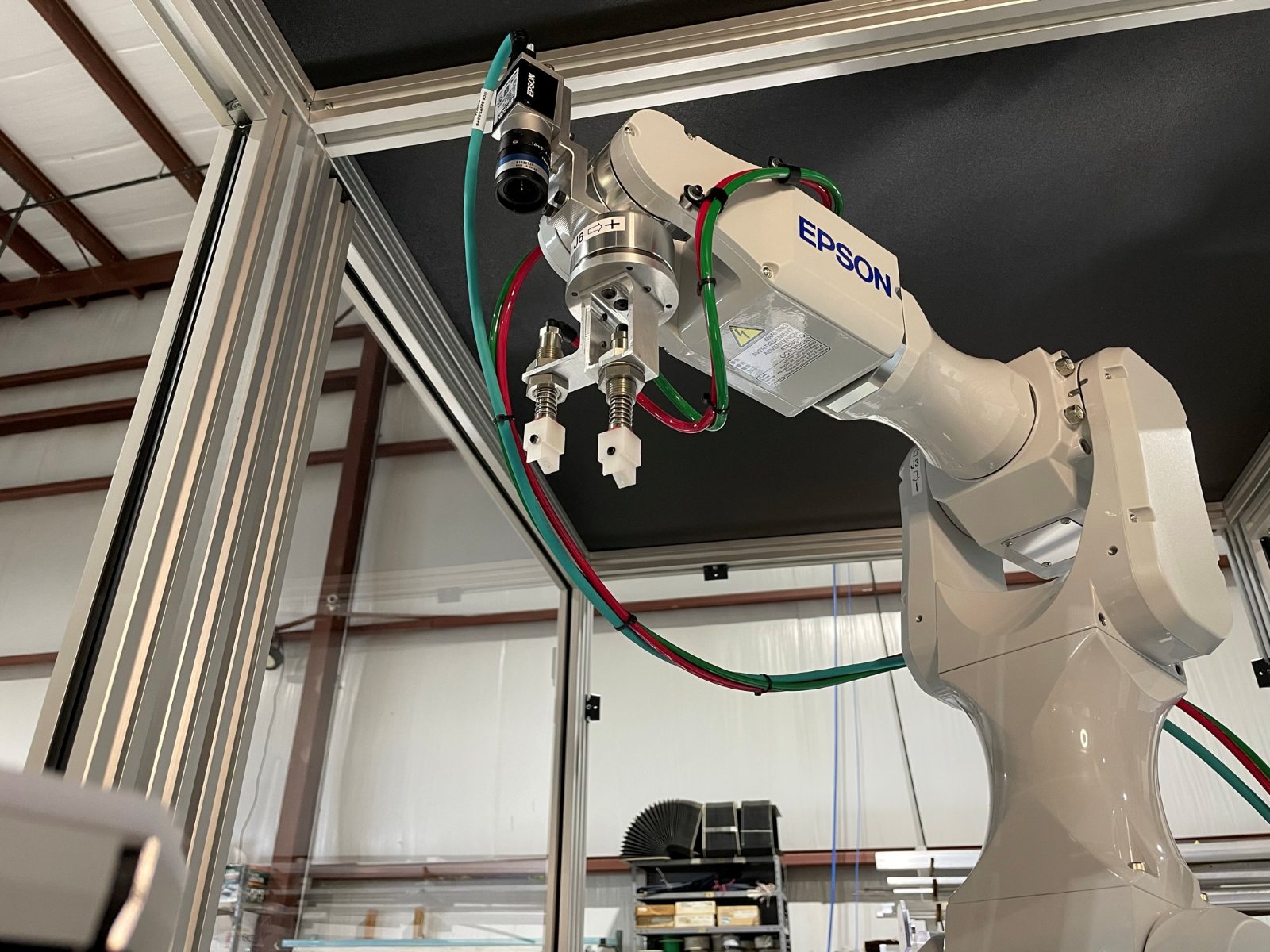
Epson C4L UID laser marking and inline inspection workcell

Medical Devices / Inspection

UID laser marking with multi-side inspection.

PRS designed a high-mix robotic workcell for UID laser marking, inline mark inspection, individual bagging, and batched output.

Production challenge

The process required three different parts to be picked, oriented, marked, inspected, individually packaged, and batched together as a single final component.

PRS solution

An Epson C4L picks parts from a segmented ARS Flexibowl, loads a servo-controlled rotating collet, marks with a DPSS UV laser, and verifies mark quality with a custom Halcon-based vision system.

  • High-mix feeding from a segmented flex feeder.
  • UID laser marking with multi-side inspection.
  • Automated individual bagging and batched output.
Kawasaki RS013N tending a guarded battery hipot test cell

Battery / Test handling

Battery hipot test handling.

PRS integrated a Kawasaki robot to handle battery trays around a guarded hipot testing cell.

Production challenge

Operators were manually supporting a test process that introduced safety concerns, throughput limits, and rework risk.

PRS solution

A Kawasaki RS013N alternates between two operator load stations and the guarded tester, exchanges trays, returns tested trays, and removes non-compliant cells to a rework bin based on test results.

  • Increased throughput.
  • Removed operators from an unsafe test-handling task.
  • Added test-result-driven reject handling.
UR5e serialized bearing handling cell with Robotiq Hand-E gripper

Aerospace and Defence / Assembly

Serialized bearing handling and assembly support.

PRS built a UR5e-based workcell to handle serialized bearing components, verify each component during the sequence, load an indexing conveyor fixture, and present completed assemblies in order.

Production challenge

The process required components to be assembled and presented in a controlled sequence because each part was serialized.

PRS solution

A UR5e with a Robotiq Hand-E gripper picks each component from operator-loaded chutes, verifies the part by measuring outer diameter, loads the fixture, and unloads completed assemblies into an ordered tray.

  • Serialized component handling.
  • Outer-diameter verification with the robot gripper.
  • Ordered tray placement for downstream process flow.
Three Kawasaki robots palletizing boxes with Mech-Mind vision verification

General Manufacturing / End of line

Vision-verified robotic palletizing.

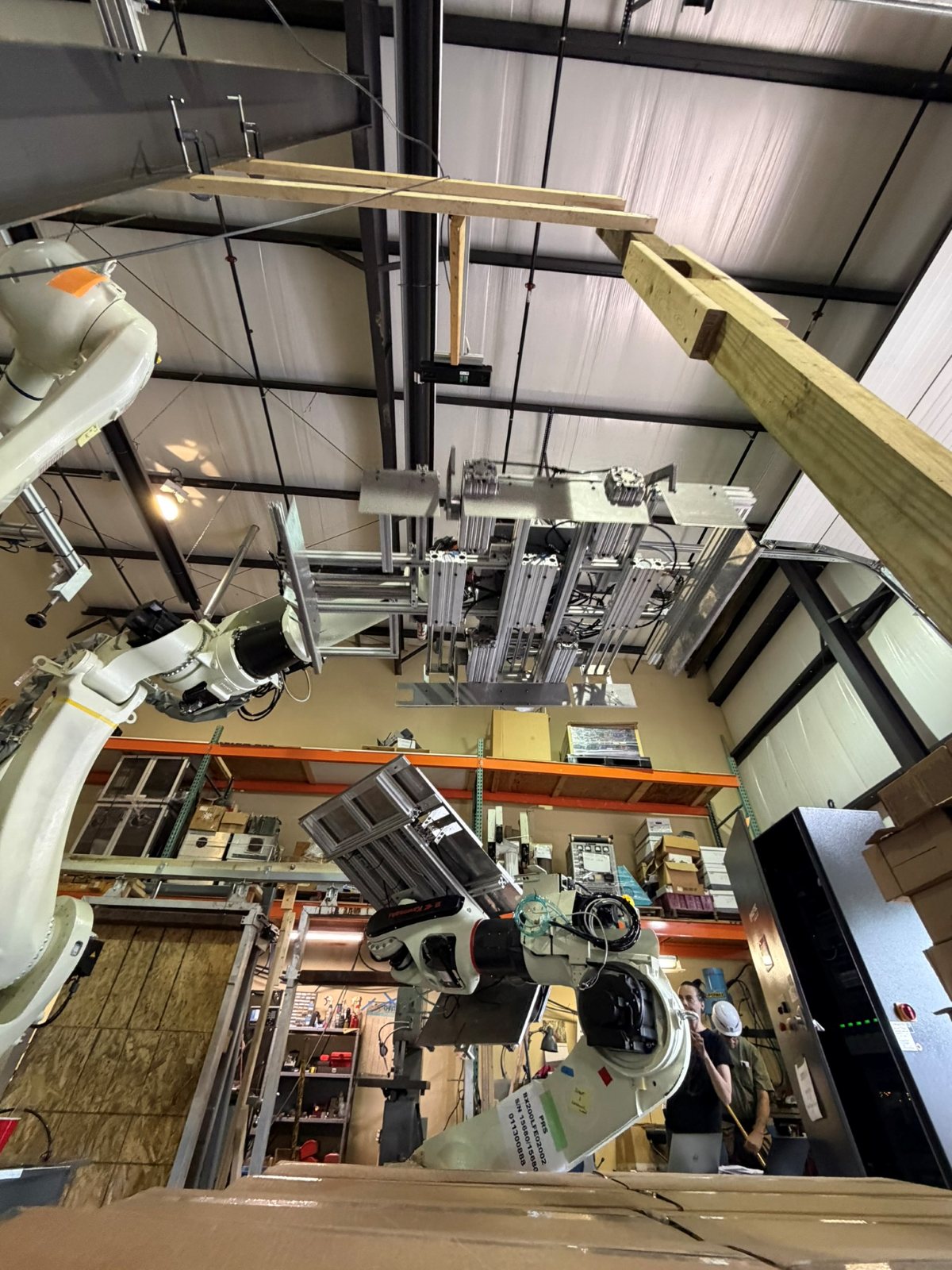
PRS built a three-robot palletizing cell that transfers boxes from a vertical frame, places them onto a pallet, verifies the pallet pattern, and adds layer separators.

Production challenge

The line required reliable transfer from a vertical frame to a pallet while maintaining pallet pattern accuracy and minimizing manual handling.

PRS solution

A Kawasaki BX200L removes a full layer from a frame, a Kawasaki BX200X places the layer using Mech-Mind vision for pallet location, and a Kawasaki RS020N verifies the pattern and places separators.

  • Three-robot palletizing sequence.
  • Mech-Mind vision for pallet location and pattern verification.
  • 15-second cycle per pallet layer.
PRS engineers developing Mech-Mind deep learning vision with Epson C4L robots

Inspection / AI-assisted vision

Deep learning vision for variable metal parts.

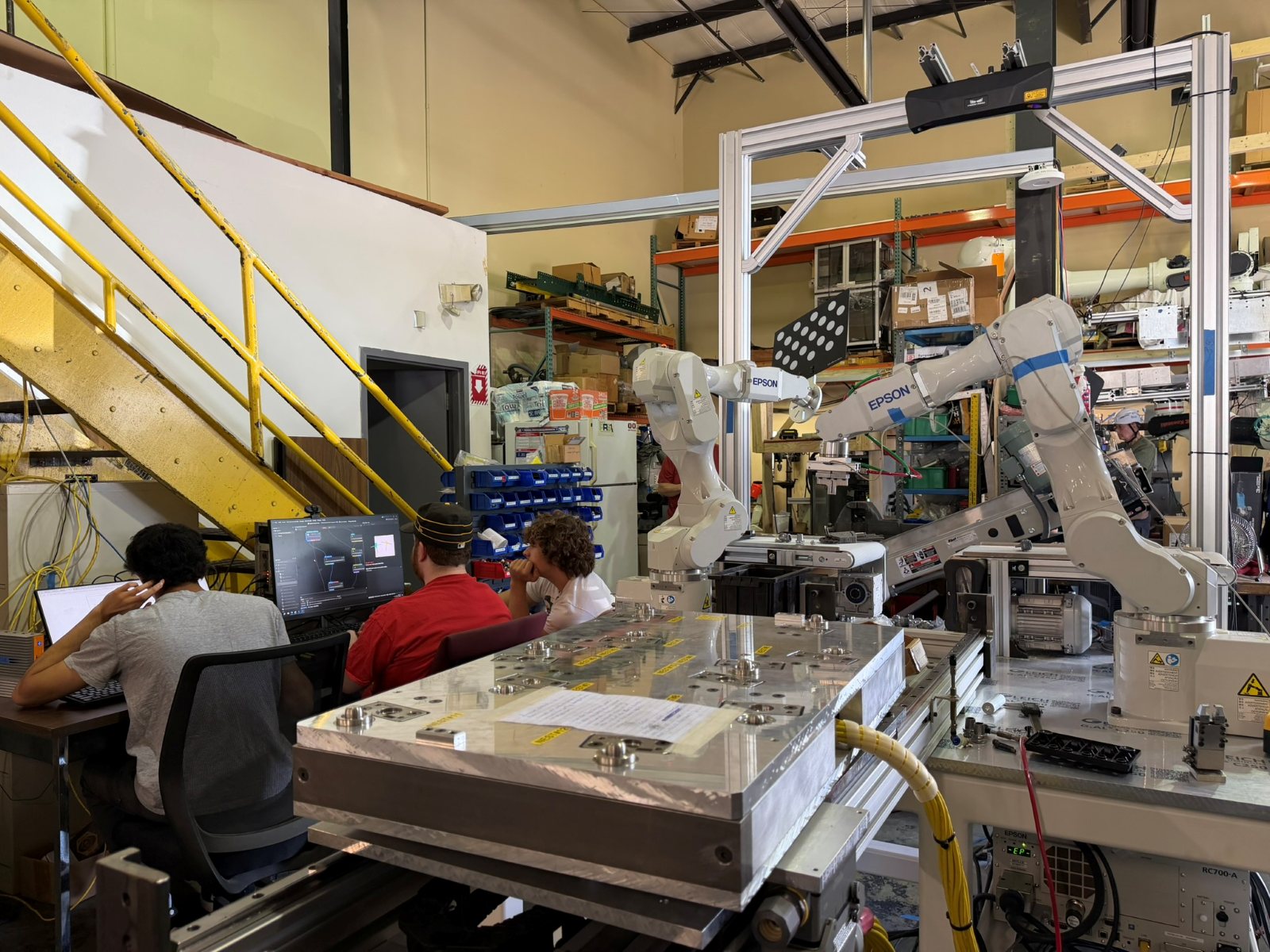
PRS developed and tested a deep learning vision approach for a two-robot Epson workcell that locates metal parts on a conveyor and loads them into a fixture.

Production challenge

Complex geometry, varying reflectivity, and part-to-part variation made conventional rule-based vision insufficient.

PRS solution

PRS used a Mech-Mind vision system with its deep learning toolkit, connected to two Epson C4L robots and a single Mech-Mind camera.

  • Deep learning vision for variable part presentation.
  • Two Epson C4L robots sharing one Mech-Mind camera.
  • Development path for more reliable robotic fixture loading.
Epson C4L case packing workcell with custom vacuum gripping

Medical Devices / Case packing

SKU-driven case packing.

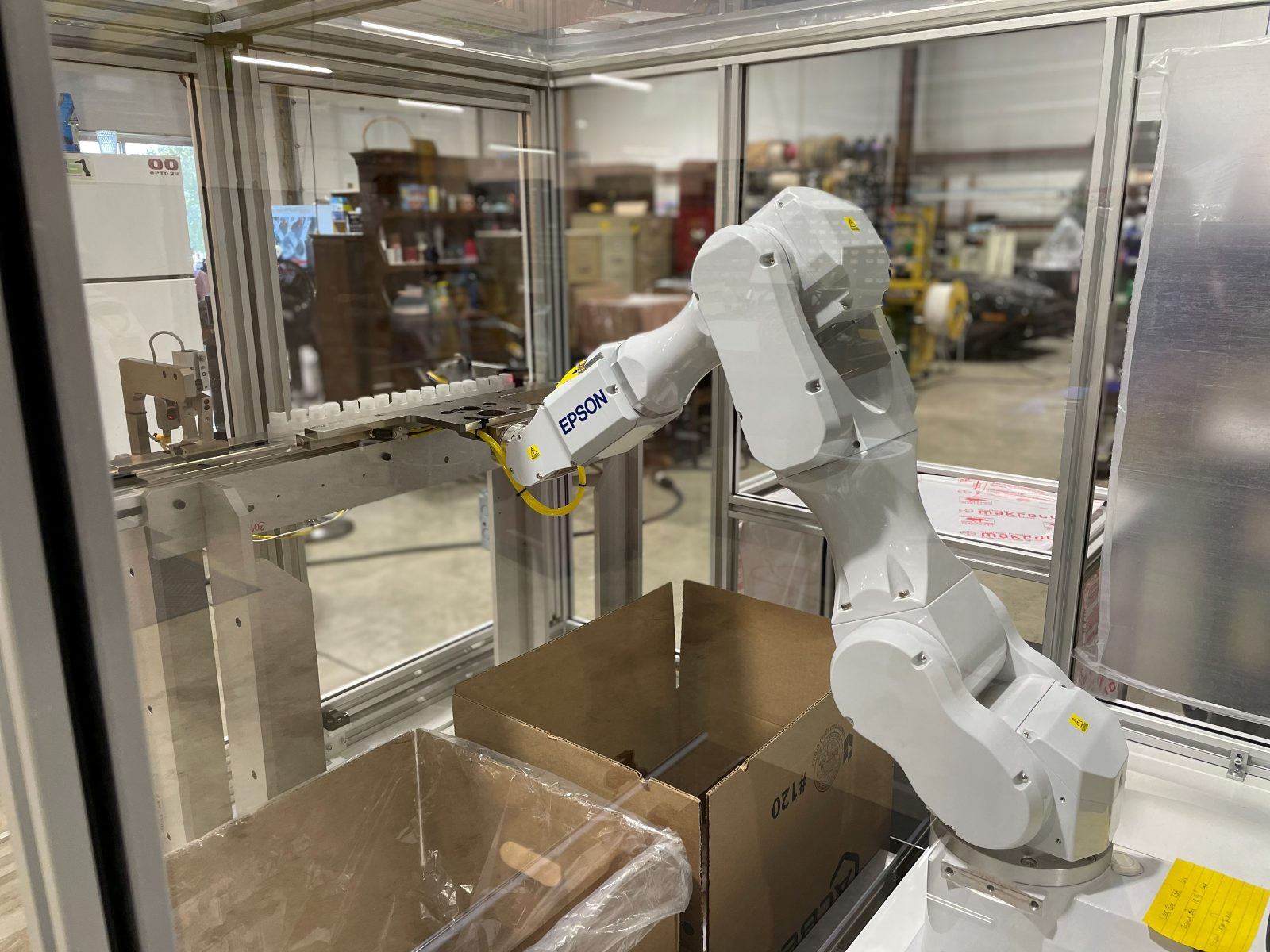
PRS built an Epson C4L case packing workcell that receives parts from an upstream assembly machine, picks groups of 16 parts, and packs them into boxes.

Production challenge

The manufacturer needed a packaging system that could receive parts directly from production, pack them consistently, and adjust packing behavior based on the selected SKU.

PRS solution

An Epson C4L uses a custom vacuum gripper for 16-up picking. A custom HMI controls cell status, production information, part selection, and SKU-driven pack recipes.

  • 16-up robotic picking.
  • SKU-driven layer style, layer count, and pack count.
  • Automatic full-box discharge and empty-box presentation.
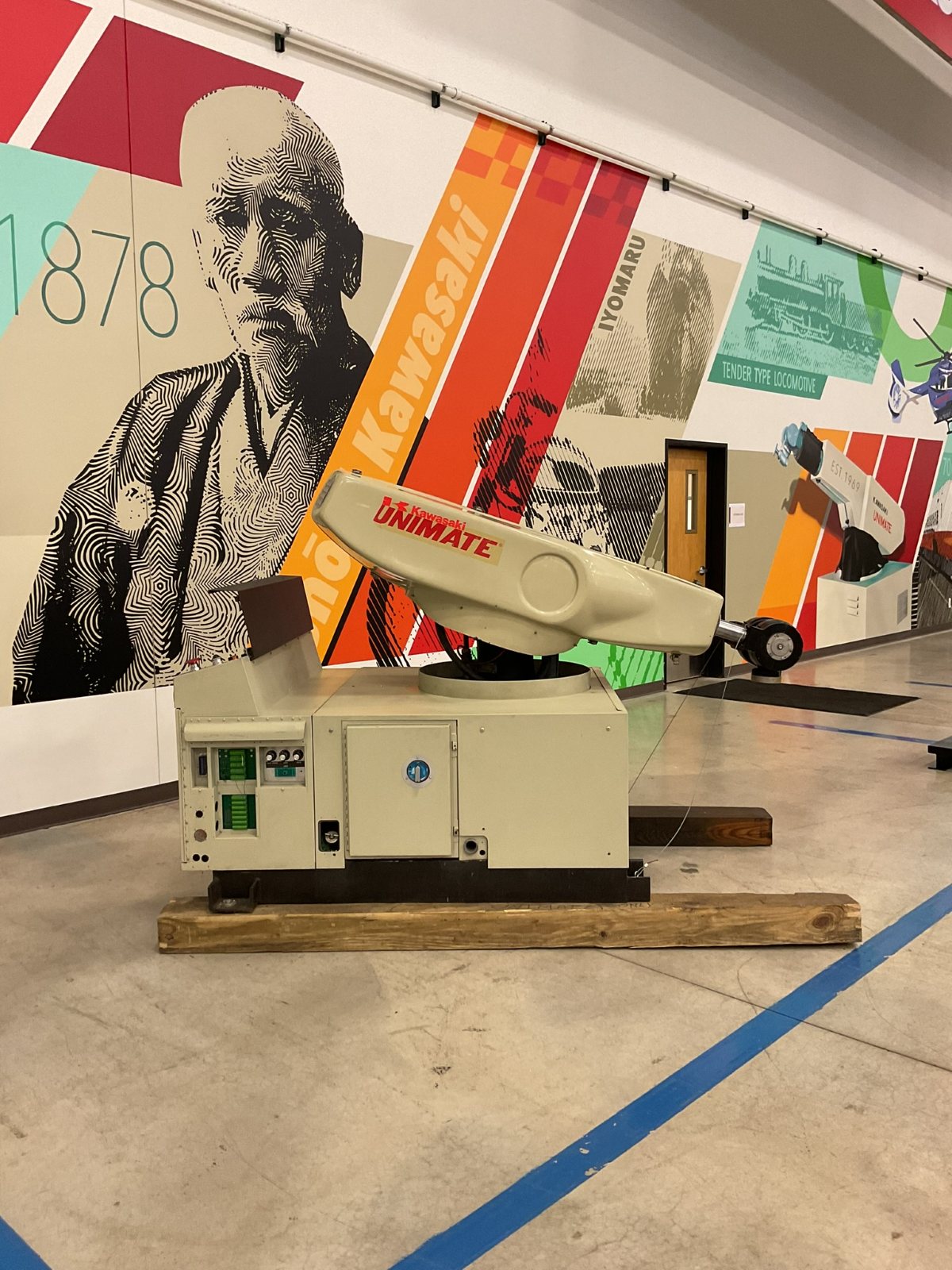
PRS-owned Unimate 2000 robot on display at Kawasaki headquarters

Robotics heritage / Long-term support

From Unimation roots to modern production robotics.

PRS combines modern automation integration with unusually deep industrial robot experience, including support for legacy systems still running in production.

Production challenge

Manufacturers often need support that spans new robotic workcells and older industrial robots still earning their place on the floor.

PRS capability

PRS owns a Unimate 2000 on display at Kawasaki headquarters. The company founder worked at Unimation after college, and PRS still supports Unimate and Puma robots in production today.

  • Modern robotic integration experience.
  • Long-term industrial robot support capability.
  • Deep practical history across legacy and current robot platforms.

Start with your process

Have a production problem that looks like one of these?

Share the parts, constraints, rates, existing equipment, and any process media. PRS will turn that into a practical automation evaluation.

Request evaluation